
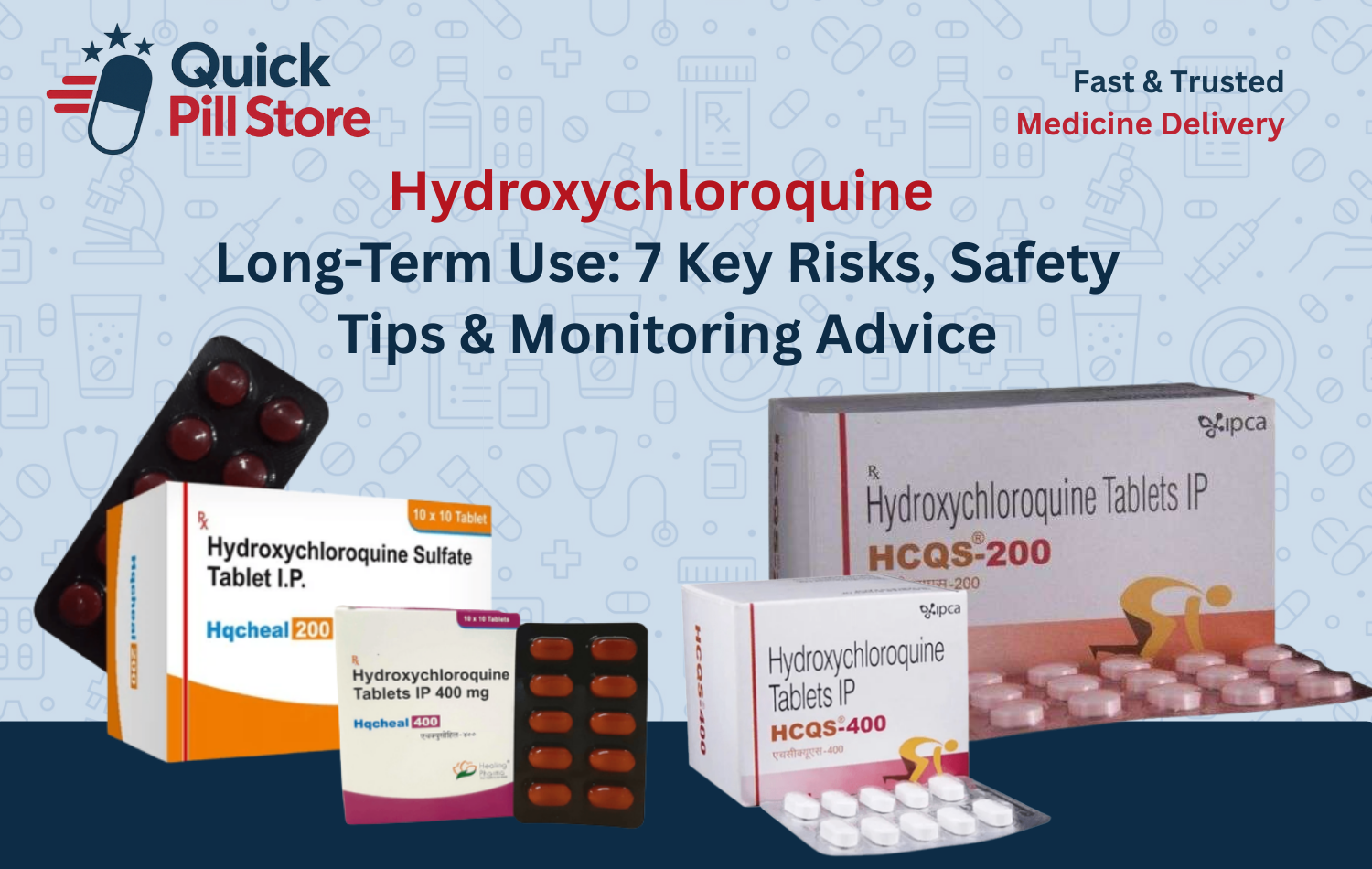
Hydroxychloroquine long-term use is a common and effective treatment strategy for many autoimmune conditions, but it requires proper medical supervision, correct hydroxychloroquine dosage, and regular monitoring to ensure safety. Hydroxychloroquine is widely prescribed for chronic inflammatory disorders, and understanding hydroxychloroquine side effects, correct dosing, and long-term risks is essential for patients and caregivers. In this detailed guide by QuickPillStore.com, we explain what hydroxychloroquine is used for, how hydroxychloroquine works, and how to safely manage long-term therapy.
What Is Hydroxychloroquine Used For?
Many patients ask, what is hydroxychloroquine used for? Originally developed as an antimalarial medicine, hydroxychloroquine sulfate is now widely used to treat:
- Rheumatoid arthritis
- Systemic lupus erythematosus (SLE)
- Discoid lupus
- Certain autoimmune skin disorders
- Malaria prevention and treatment
Today, hydroxychloroquine uses mainly focus on autoimmune diseases because of its immune-modulating properties. Doctors often prescribe hydroxychloroquine 200 mg or 400 mg daily depending on the condition and patient weight.
How Hydroxychloroquine Works
Understanding how hydroxychloroquine works helps explain why it is effective for chronic conditions.
Hydroxychloroquine affects the immune system by:
- Reducing inflammation
- Modifying immune cell communication
- Decreasing abnormal immune responses
It works inside cells by increasing the pH of intracellular compartments, which reduces immune activation. This mechanism makes it highly effective for long-term autoimmune disease management.
Recommended Hydroxychloroquine Dosage
Proper hydroxychloroquine dosage is critical for long-term safety.
Standard Adult Dosage:
- Rheumatoid arthritis: 200–400 mg daily
- Lupus: 200–400 mg daily
- Malaria: Dose varies depending on prevention or treatment
The hydroxychloroquine dose for autoimmune diseases is usually calculated based on body weight. Doctors aim to keep the daily dose under 5 mg/kg of body weight to reduce retinal toxicity risk.
Hydroxychloroquine 200 mg tablets are commonly prescribed for maintenance therapy.
7 Key Risks of Hydroxychloroquine Long-Term Use
Although generally considered safe, long-term use requires monitoring.
1. Retinal Toxicity (Eye Damage)
The most serious risk of long-term therapy. It may lead to vision changes if not detected early.
2. Hydroxychloroquine Side Effects in the Digestive System
Common side effects of hydroxychloroquine include:
- Nausea
- Vomiting
- Stomach pain
- Diarrhea
These are usually mild and improve over time.
3. Skin Reactions
Some patients experience rash, itching, or skin pigmentation changes.
4. Cardiac Effects
Rarely, long-term use can affect heart rhythm (QT prolongation).
5. Muscle Weakness
Prolonged therapy may cause muscle weakness in rare cases.
6. Blood Disorders
Uncommon but possible effects on blood cell counts.
7. Hypoglycemia
Hydroxychloroquine may lower blood sugar levels in some individuals.
Monitoring Tips for Safe Long-Term Use
To minimize risks, doctors recommend:
- Annual eye exams after 5 years of therapy
- Baseline eye screening before starting treatment
- Regular blood tests
- Dose adjustments based on weight
- Immediate reporting of vision changes
Routine monitoring significantly reduces the risk of serious complications.
Who Should Avoid Long-Term Hydroxychloroquine?
- Patients with pre-existing retinal disease
- Individuals with severe kidney disease
- People allergic to hydroxychloroquine sulfate
Always consult a healthcare provider before starting or continuing therapy.
Product Information Available at QuickPillStore.com
At QuickPillStore.com, you can find reliable hydroxychloroquine options for prescribed treatment.
HCQS 200 Mg
HCQS 200 Mg is a widely prescribed hydroxychloroquine medication used for the long-term management of autoimmune diseases and certain inflammatory conditions. It contains 200 mg of hydroxychloroquine sulfate and is commonly recommended for lupus and rheumatoid arthritis treatment.
Description Points:
- Contains hydroxychloroquine sulfate 200 mg, which helps regulate abnormal immune responses in autoimmune disorders.
- Commonly prescribed for rheumatoid arthritis, systemic lupus erythematosus, and malaria prevention.
- Helps reduce joint pain, swelling, skin rashes, and inflammation associated with chronic autoimmune diseases.
- Suitable for long-term therapy when taken under proper medical supervision with regular monitoring.
- Oral tablet form ensures convenient once- or twice-daily dosing as per the doctor’s prescription.
HCQS 400 Mg
HCQS 400 mg is a higher-strength hydroxychloroquine tablet designed for patients who require a stronger daily dose for effective autoimmune disease control.
Description Points:
- Contains Hydroxychloroquine Sulfate 400 mg for enhanced therapeutic action in moderate to severe cases.
- Prescribed for active lupus, rheumatoid arthritis, and other inflammatory autoimmune conditions.
- Works by reducing immune system overactivity and preventing disease flare-ups.
- Recommended dosage should be carefully calculated based on body weight to minimize side effects.
- Requires regular eye exams and medical monitoring during long-term treatment.
Hqcheal 200 Mg
Hqcheal 200 mg is an effective hydroxychloroquine tablet used for chronic autoimmune disease management and inflammation control.
Description Points:
- Formulated with Hydroxychloroquine Sulfate 200 mg for safe and consistent immune regulation.
- Commonly used in long-term treatment of lupus and rheumatoid arthritis.
- Helps decrease inflammation, joint stiffness, fatigue, and skin symptoms.
- Suitable for maintenance therapy in stable autoimmune conditions.
- Cost-effective option for patients requiring continuous medication support.
Hqcheal 400 Mg
Hqcheal 400 mg is a higher-dose hydroxychloroquine medication intended for physician-directed treatment of autoimmune disorders.
Description Points:
- Contains Hydroxychloroquine Sulfate 400 mg for patients requiring stronger therapeutic dosing.
- Supports long-term management of lupus and rheumatoid arthritis symptoms.
- Helps control immune-mediated inflammation and reduce disease progression risk.
- Should be taken strictly as prescribed to avoid hydroxychloroquine side effects.
- Regular monitoring, including eye examinations, is recommended during extended use.
Benefits of Long-Term Hydroxychloroquine Therapy
When used correctly, benefits include:
- Reduced disease flare-ups
- Improved joint function
- Better quality of life
- Decreased steroid dependence
- Long-term autoimmune stability
For many patients, benefits outweigh the risks when properly monitored.
Final Thoughts
Hydroxychloroquine long-term use can be safe and highly effective when prescribed at the correct hydroxychloroquine dosage and monitored regularly. Understanding hydroxychloroquine side effects, following medical advice, and attending routine eye exams are essential steps in minimizing risks.
At QuickPillStore.com, patients can access trusted hydroxychloroquine products such as HCQS 200 mg, HCQS 400 mg, Hqcheal 200 mg, and Hqcheal 400 mg, ensuring quality and affordability.
Always consult your healthcare provider before starting or adjusting treatment.
FAQs
1. What is hydroxychloroquine used for?
Hydroxychloroquine is mainly used to treat autoimmune diseases like lupus and rheumatoid arthritis, and it is also used for malaria prevention and treatment.
2. How does hydroxychloroquine work in autoimmune diseases?
Hydroxychloroquine works by reducing immune system overactivity and lowering inflammation, which helps control joint pain, swelling, and skin symptoms.
3. What are the common hydroxychloroquine side effects?
Common hydroxychloroquine side effects include nausea, stomach pain, headache, dizziness, and skin rash. Most side effects are mild and improve over time.
4. What are serious side effects of hydroxychloroquine?
Serious side effects of hydroxychloroquine may include vision changes, heart rhythm issues, muscle weakness, or severe allergic reactions. Immediate medical attention is required if these occur.
5. What is the recommended hydroxychloroquine dosage?
The usual hydroxychloroquine dosage for autoimmune diseases ranges between 200 mg and 400 mg daily, depending on body weight and medical condition.
6. What is the hydroxychloroquine dose for autoimmune diseases?
The hydroxychloroquine dose for autoimmune diseases is generally calculated based on body weight, often not exceeding 5 mg per kilogram per day to reduce retinal toxicity risk.
7. Is hydroxychloroquine 200 mg safe for long-term use?
Hydroxychloroquine 200 mg is considered safe for long-term use when taken under medical supervision with regular eye and health monitoring.
8. What is hydroxychloroquine sulfate?
Hydroxychloroquine sulfate is the active salt form of hydroxychloroquine used in tablets for treating autoimmune diseases and malaria.
9. Can hydroxychloroquine cause eye problems?
Yes, long-term use may cause retinal toxicity. Regular eye examinations are recommended, especially after five years of continuous use.
10. Can hydroxychloroquine be taken daily?
Yes, hydroxychloroquine is usually taken daily as prescribed by a doctor for chronic autoimmune disease management.