
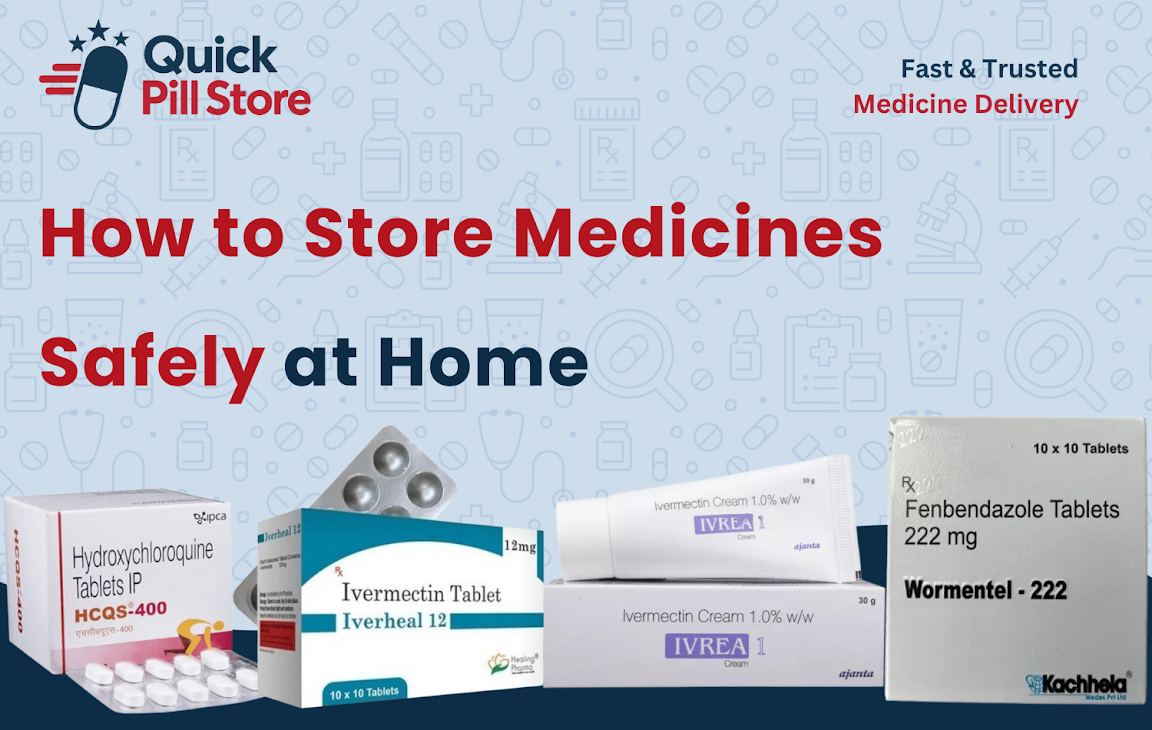
One of the most crucial yet frequently ignored components of routine healthcare is storing medicine correctly. A lot of people only think about getting the right drug, but they forget that storing it wrong might make it less effective, modify its chemical stability, or even make it unsafe to use. Storing medicine correctly helps keep your family safe, improves treatment outcomes, and supports the long-term safety of family medicine.
This extensive article shows you how to store safely common drugs like allergy medicine, antibiotics, and specialised treatments like fenbendazole. It also points out some trusted solutions from QuickPillStore.
How to Store Medicines Safely Essential
Medicines are made to work in certain situations. A medicine’s effectiveness can be affected by heat, moisture, light, and air. If you don’t store medicines properly, they can lose their strength faster, which can make them less effective or induce adverse effects you didn’t expect.
Safe storage also keeps kids, seniors, and pets from accidentally eating things. Learning how to store medicine correctly makes guarantee that treatments stay safe and work well for as long as they are supposed to.
Understanding Different Types of Medicines
There are many different things in every medical cabinet at home. Each kind needs different kinds of care.
Daily Use Medicines
Pain relievers, vitamins, and allergy medicine are some of the most common types of medicine. People often use these, so they should be kept where they are easy to find but safe from heat and humidity.
Prescription Medicines
You must follow the storage recommendations exactly while taking prescription drugs like antibiotics and long-term therapies. If not handled properly, treatment may not work as well and may not be successful.
Specialized Medicines
Fenbendazole and other medicines need to be stored carefully to stay stable. These items need to be stored properly, even if they aren’t used every day.
Always Follow the Label Instructions
The label is the best way to know how to store medicine. It gives you essential details regarding the temperature, humidity, light exposure, and expiration dates.
Many of the medicines sold by QuickPillStore come with instructions on how to store them properly. Following these steps will keep the medicine working as it should until the expiration date.
Ideal Storage Environment for Medicines
Most medicines work best when they are kept in cool, dry, and dark places.
Heat can change the way chemicals are made.
Tablets can break down or dissolve if they get wet.
Active chemicals can break down in light.
Don’t keep drugs near windows, ovens, or heaters. A dry cupboard in a corridor or bedroom is usually the safest choice.
Why Bathrooms and Kitchens Are Not Suitable
The temperature and humidity levels in bathrooms and kitchens change a lot. Steam from cooking or taking a shower can swiftly break down drugs.
Choose a steady place with few changes in the environment to store family medicine safely.
Organizing Medicines for Safety and Convenience
A well-organised medicine storage system helps you keep track of expiration dates and avoid blunders.
Keep medicines in their original boxes.
Keep medicines for adults and children apart.
Keep allergy medicine in a separate place so you can get to it quickly.
Check the expiration dates every month.
Organisation helps people use things safely and stops them from getting confused.
Safe Storage of Antibiotics
You need to be extremely careful with antibiotics because if you don’t store them properly, they won’t work as well.
They should always stay in their original container with the labels still on. Some liquid antibiotics need to be kept in the fridge, whereas pills can normally be kept at room temperature.
Never provide antibiotics to someone else or keep them over their expiration date.
Safe Storage of Allergy Medicine
People generally only use allergy medicine during certain times of the year, so it may remain unused for a long time. Because of this, it’s very necessary to check the expiration dates.
Keep allergy medicines in a dry spot that doesn’t get direct sunlight. Keep flavoured syrups or chewable tablets away from kids, especially.
Specialized Product Storage from QuickPillStore
QuickPillStore sells a variety of reliable health items that need to be stored properly to keep their quality.
Fenbendazole 222 Mg
- Fenbendazole 222 Mg should be stored at normal room temperature in a dry and stable environment to help preserve its chemical structure and long-term effectiveness.
- This medicine should always be protected from moisture and direct sunlight, as environmental exposure may reduce product stability over time.
- Keeping Fenbendazole 222 Mg in its original packaging ensures proper identification, accurate reference information, and protection from external contamination.
- Consistent storage conditions play an important role in maintaining potency throughout the entire shelf life of the medicine.
HCQS 400 Mg
- To keep HCQS 400 Mg working well, it should be kept in a cool, dry environment with little change in temperature.
- HCQS 400 Mg may not be stable if it is exposed to too much heat or humidity, thus it is best to store it indoors in controlled conditions.
- The tablets are safer from air, moisture, and inadvertent contamination when the packaging is sealed and whole.
- When the medicine is used as directed by a doctor, proper storage helps it work reliably.
- To lower the risk of accidental exposure, you should always keep this drug out of reach of kids and dogs.
Ivermectin Cream
- To keep Ivermectin Cream from getting contaminated and exposed to air, it should be kept with the cap completely covered when not in use.
- Ivermectin Cream keeps its texture, consistency, and absorption quality when you use it by not letting it get too hot or too cold.
- A dry place to store the formulation keeps it safe from moisture that could affect its stability.
- Keeping topical medicines and oral medicines apart helps stop people from using them wrong or making mistakes when applying them.
- If you store the cream correctly, it will stay effective, smooth, and safe to use for the whole time it is advised.
Covimectin 12mg
- You should keep Covimectin 12mg at room temperature and in a dry place so that humidity doesn’t affect it.
- Too much moisture can damage the tablets, which could make Covimectin 12mg less effective over time.
- Putting the tablets back in their original blister packaging keeps them safe from air and extra handling.
- Stable storage conditions assist keep strength, uniformity, and dependability throughout the shelf life.
- To help keep medicine safe at home, this medicine should be kept out of the reach of kids.
Iverheal 12mg
- To keep Iverheal 12mg chemicals stable, it should be kept out of direct sunlight and moisture.
- Original packaging protects Iverheal 12mg by keeping the dose information safe and lowering the chance of exposure to the environment.
- When stored in the same way all the time, tablets will be strong when used as prescribed.
- Don’t move tablets into containers that aren’t labelled, as this could lead to misunderstanding or mistakes in dosage.
- To store medicine safely and responsibly at home, it needs to be kept out of reach of kids and pets.
Keep Medicines Away from Children and Pets
One of the most important things to remember while storing medicine is to keep it out of reach of people who don’t need it.
Use cabinets that are high or boxes that can be locked.
Don’t leave medicine on the counter.
Teach family members how to safely use medicine.
Child-resistant caps are beneficial, but they don’t work all the time. The safest way is still to keep things apart.
Monitoring Expiration Dates
Medicines that have passed their expiration date may not work as well or may have unpleasant side effects. It’s important to check regularly.
Make it a habit to check the dates on your medicines every month.
Get rid of old drugs in a safe way.
Quickly replace items that have gone bad
Proper expiry management helps keep healthcare procedures at home safe and effective.
Proper Disposal of Unused Medicines
Don’t keep drugs you don’t use for a long time. Old drugs make it more likely that people will use them by accident.
Follow the rules for getting rid of things in your area or the pharmacy’s take-back program. If you can’t find them, lock up drugs before throwing them away according to safety guidelines.
Disposing of things in a responsible way is good for both people and the environment.
Creating a Family Medicine Plan
A simple family medicine record can help keep things safe and organised.
Write down the name of each medicine
Instructions for storing notes
Keep track of when things expire
Write down who takes each drug.
This method makes it easier to talk to each other and helps in managing family medicine better.
Conclusion
Knowing how to store medicine correctly is a simple yet effective method to keep your family healthy. Proper storage makes ensuring that medicines operate as they should, from basic allergy drugs and important antibiotics to specialised therapies like fenbendazole.
You can get safe products like Fenbendazole 222 Mg, HCQS 400 Mg, Ivermectin Cream, Covimectin 12mg, and Iverheal 12mg from QuickPillStore. When these items are stored properly, they help make home caregiving routines safer and more successful.
Storing things safely today will make you healthier tomorrow.
FAQs
1. Why is proper medicine storage important at home?
Proper storage helps maintain the effectiveness of medicine, prevents chemical breakdown, and reduces the risk of accidental misuse by children or pets.
2. What is the best way to learn how to store medicine correctly?
The best way to understand how to store medicine is by reading the label instructions and following temperature and humidity guidelines provided by the manufacturer.
3. Can humidity affect allergy medicine?
Yes, high humidity can reduce the effectiveness of allergy medicine by causing tablets to degrade or dissolve prematurely.
4. How should antibiotics be stored at home?
Antibiotics should be stored in their original packaging in a cool, dry place and used only within their recommended shelf life.
5. Is room temperature suitable for storing fenbendazole products?
Most fenbendazole products are stable at room temperature when kept in a dry environment away from direct sunlight.
6. Should topical medicines be stored separately from oral medicines?
Yes, keeping topical medicines separate helps prevent confusion and accidental misuse.
7. Why should medicines stay in their original packaging?
Original packaging protects medicines from moisture, provides dosage information, and reduces the risk of misidentification.
8. How often should I check medicine expiration dates?
It is recommended to check expiration dates at least once a month to ensure medicines remain safe and effective.
9. Is it safe to store medicine in the bathroom?
Bathrooms are not ideal because moisture and temperature changes can affect medicine stability.
10. How does proper storage support family healthcare?
Correct medicine storage helps ensure reliable treatment outcomes and promotes safe family healthcare practices.