
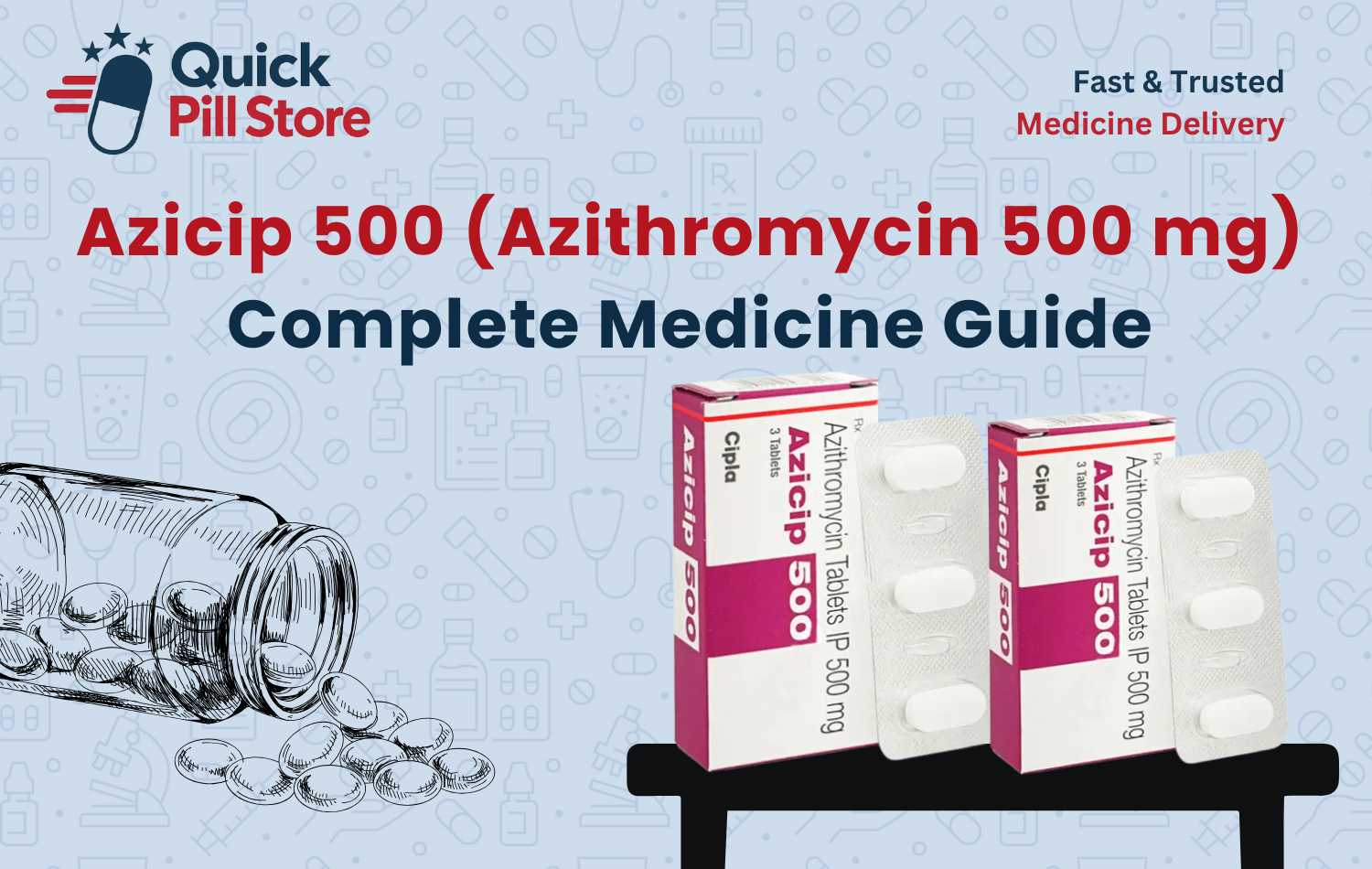
Azicip 500 is a widely prescribed antibiotic medicine that contains azicip 500 mg as its active ingredient. It belongs to the macrolide antibiotic group and is commonly used to treat a wide range of bacterial infections affecting the respiratory tract, skin, ear, throat, and certain sexually transmitted infections.
Doctors prefer Azicip 500 because of its broad-spectrum activity, convenient dosing, and generally good tolerability. However, like all antibiotics, it must be taken only under medical guidance to ensure safety and effectiveness.
This complete medicine guide explains Azicip 500 uses, dosage, side effects, precautions, interactions, and FAQs in a simple and easy-to-understand manner.
What Is Azicip 500?
Azicip 500 is a prescription antibiotic tablet containing Azithromycin 500 mg. It works by stopping the growth of bacteria, helping the body’s immune system eliminate the infection.
Medicine Overview
- Brand Name: Azicip 500
- Generic Name: Azithromycin
- Strength: 500 mg
- Drug Class: Macrolide antibiotic
- Dosage Form: Oral tablet
Azicip 500 is effective only against bacterial infections and does not work for viral infections such as the common cold or flu.
Uses of Azicip 500
Azicip 500 is prescribed for treating various bacterial infections, including:
1. Respiratory Tract Infections
- Bronchitis
- Pneumonia
- Sinusitis
2. Ear, Nose & Throat Infections
- Tonsillitis
- Pharyngitis
- Otitis media (ear infection)
3. Skin & Soft Tissue Infections
- Bacterial skin infections
- Infected wounds
4. Sexually Transmitted Infections
- Chlamydia infections
- Certain urethral and cervical infections
5. Other Bacterial Infections
- Mild to moderate infections caused by susceptible bacteria
How Azicip 500 Works
Azicip 500 works by inhibiting bacterial protein synthesis. It binds to the bacterial ribosome, preventing bacteria from growing and multiplying. This action helps control the infection and allows the immune system to eliminate the bacteria completely.
Azicip 500 Dosage
The dosage of Azicip 500 depends on the type and severity of infection, age, and medical condition.
General Dosage Guidelines
- Usually one tablet once daily
- Treatment duration may range from 3 to 5 days
- Some infections may require a single-dose regimen
⚠️ Important:
Always follow your doctor’s instructions. Do not change the dose or stop the medicine early, even if symptoms improve.
How to Take Azicip 500
- Take the tablet with water
- Can be taken with or without food
- Take it at the same time every day
- Do not crush or chew the tablet
Completing the full course helps prevent antibiotic resistance.
Side Effects of Azicip 500
Most people tolerate Azicip 500 well, but some may experience mild side effects.
Common Side Effects
- Nausea
- Vomiting
- Diarrhea
- Stomach pain
- Headache
Rare but Serious Side Effects
- Allergic reactions (rash, itching, swelling)
- Irregular heartbeat
- Severe diarrhea
- Liver-related problems
Seek medical help immediately if serious symptoms occur.
Precautions & Warnings
Before taking Azicip 250 , inform your doctor if you have:
- Liver disease
- Heart rhythm disorders
- Kidney problems
- History of antibiotic allergy
Pregnancy & Breastfeeding
- Use only if prescribed by a doctor
- Benefits should outweigh potential risks
Drug Interactions
Azicip 500 may interact with:
- Antacids containing magnesium or aluminum
- Blood thinners
- Heart rhythm medications
- Certain cholesterol-lowering drugs
Always inform your doctor about all medicines and supplements you are taking.
Storage Instructions
- Store below 25°C
- Keep away from moisture and sunlight
- Keep out of reach of children
Medical Disclaimer
This content is for informational purposes only and does not replace professional medical advice. Always consult a qualified healthcare provider before using Azicip 500.
FAQ
1. What is Azicip 500 used for?
Azicip 500 is used to treat bacterial infections affecting the lungs, throat, skin, ears, and some sexually transmitted infections.
2. Is Azicip 500 an antibiotic?
Yes, it is a macrolide antibiotic containing Azithromycin 500 mg.
3. Can I take Azicip 500 without a prescription?
No. Azicip 500 should be taken only when prescribed by a doctor.
4. How long does Azicip 500 take to work?
Symptoms usually improve within 2–3 days, but the full course must be completed.
5. Can Azicip 500 be taken with food?
Yes, it can be taken with or without food.
6. What should I do if I miss a dose?
Take it as soon as you remember. Skip it if it’s close to the next dose. Do not double the dose.
7. Does Azicip 500 treat viral infections?
No, it is ineffective against viral infections like flu or cold.
8. Is Azicip 500 safe during pregnancy?
It should be used during pregnancy only if prescribed by a doctor.
9. Can Azicip 500 cause diarrhea?
Yes, mild diarrhea is a common side effect. Severe diarrhea should be reported to a doctor.
10. Can I stop Azicip 500 once I feel better?
No. Always complete the full prescribed course to avoid antibiotic resistance.
Conclusion
Azicip 500 (Azithromycin 500 mg) is a trusted antibiotic for treating various bacterial infections when used responsibly. Proper dosage, completing the course, and following medical advice are essential for safe and effective treatment.
For genuine medicines and detailed product information, always rely on a trusted online pharmacy like QuickPillStore.