
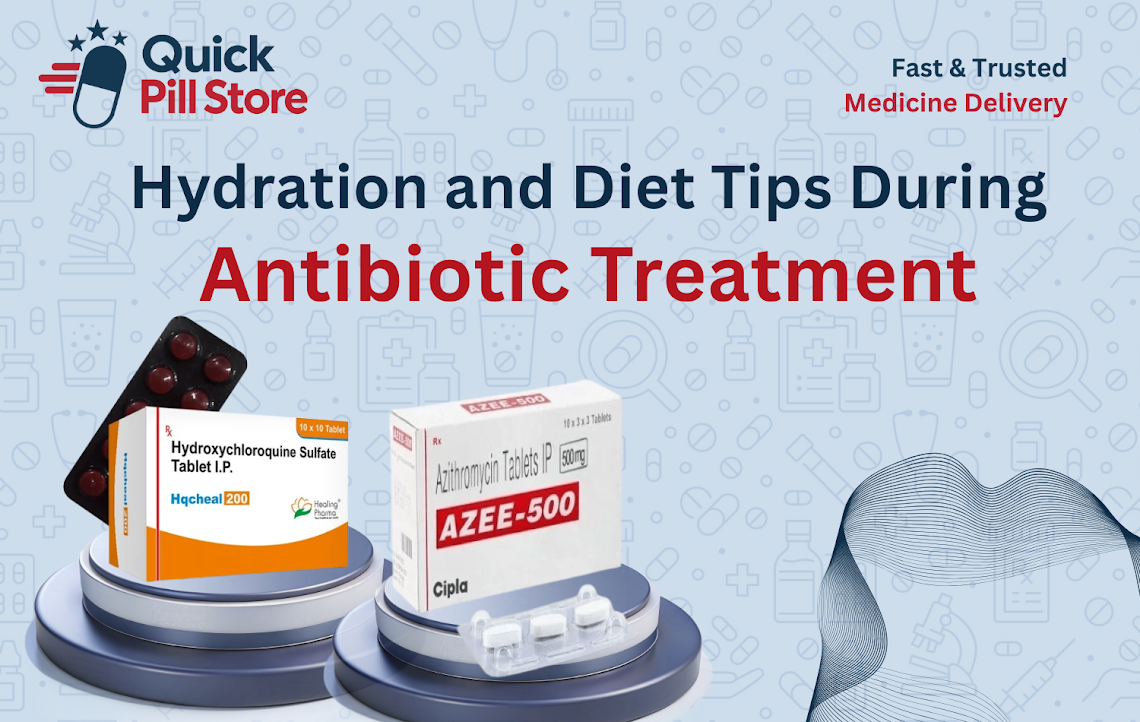
When you are taking antibiotics, your body goes through several internal changes as it works to fight bacterial infections. Whether you are using an antibiotic tablet, antibiotic drugs, antibiotic medicine, or even an antibiotic injection, your system needs proper hydration and nutrition for faster recovery. Many people search for the exact antibiotic meaning, antibiotics definition, or even antibiotics classification, but very few understand how diet and hydration influence the performance of these medicines. At QuickPillStore, patients not only get access to genuine products like Azithromycin (ZPACK), Azithral 500 MG (Z PACK), Amoxicillin, Augmentin, Fenbendazole, and HCQS 400 MG but also receive guidance on how to support their body during treatment.
Antibiotics are powerful medicines designed to treat bacterial infections, including fever, throat infections, respiratory infections, stomach infections and more. You may also be using antibiotics for fever, antibiotics for throat infection, or antibiotics due to exposure to BirdFlu and HMPV virus. No matter the cause, hydration and diet play an essential role in helping antibiotics work effectively.
Understanding Antibiotics Before You Begin Treatment
To follow correct diet and hydration practices, it helps to understand what antibiotics are.
Antibiotic meaning refers to medicines that kill bacteria or stop them from multiplying. Antibiotics definition in medical terms describes them as antibacterial drugs used to treat bacterial infections. Antibiotics classification includes groups like macrolides, penicillin’s, cephalosporins, tetracyclines, and fluoroquinolones.
Commonly used antibiotic drugs include
Azithromycin (ZPACK)
Azithral 500 MG (Z PACK)
Amoxicillin
Augmentin
Ivermectin based combinations
Antibiotic injections prescribed by a doctor
At QuickPillStore, customers get access to a wide range of authentic antibiotic medicine options with professional guidance for safe use.
Why Hydration Matters During Antibiotic Treatment
Antibiotics place an additional load on your body because they work internally in the bloodstream, liver, and digestive system. Good hydration helps in the following ways.
- Hydration helps the kidneys flush out infection-causing bacteria and waste materials created while antibiotics work.
- Drinking water supports your digestive system, which often becomes sensitive due to antibiotic medicine.
- Many antibiotics for fever and antibiotics for throat infection may cause dryness, dehydration, or mild nausea, making water intake even more important.
- Staying hydrated reduces the risk of side effects like dizziness, headaches, dry mouth, and fatigue.
Doctors recommend drinking water regularly throughout the day. Coconut water, lemon water, ORS solutions, fresh juices, and herbal teas also help maintain electrolyte balance.
Diet Tips to Support Antibiotic Medicine
Antibiotics may affect the gut lining and reduce healthy bacteria levels temporarily. A proper diet helps rebuild gut balance.
- Eat probiotic-rich foods such as yogurt, curd, buttermilk, kefir, and fermented vegetables.
- Include prebiotic foods like bananas, garlic, onions, and oats which help good bacteria rebuild.
- Add fresh fruits and vegetables to support immunity.
- Choose easily digestible foods like rice, soups, khichdi, boiled vegetables, dal, oats, and clear broths.
- Avoid sugary foods, processed food, carbonated drinks, and deep-fried items because they slow recovery.
- Avoid alcohol as it affects liver function, making it harder for your body to handle antibiotic drugs.
- Include protein sources like eggs, chicken, paneer, and legumes to strengthen your system.
Following a stable diet supports the performance of popular antibiotic tablets like Azithromycin, Azithral 500 MG, and Amoxicillin.
Foods to Avoid While Taking Antibiotics
Certain foods interfere with how antibiotic drugs are absorbed.
- Avoid grapefruit and grapefruit juice because they react with many antibiotics.
- Avoid excessive dairy with some antibiotics, especially tetracyclines and fluoroquinolones.
- Avoid heavy caffeine intake, which may increase nervousness and dehydration.
- Avoid iron and calcium supplements near antibiotic doses unless advised by a doctor.
- Avoid fast food, spicy food, and high-fat meals.
Hydration and Diet Tips During Antibiotic Treatment
These practices support antibiotics for throat infection, antibiotics for fever, and antibiotic injection recovery.
Product Spotlight and Professional Guidance From QuickPillStore
Here are detailed product descriptions of the medicines you can find on QuickPillStore, written in long professional points for clear understanding.
Azithromycin (ZPACK) and Azithral 500 MG (Z PACK)
These macrolide antibiotics are commonly used for throat infections, respiratory infections, skin infections, and bacterial fever.
- Azithromycin ZPACK offers easy once-daily dosing with high bacterial clearance.
- Azithral 500 MG provides strong action against Bird Flu and HMPV Virus related complications when prescribed.
- These antibiotic tablets are well tolerated and recommended by doctors for short courses.
- Suitable for bacterial sinus infections, sore throat, and chest infections.
- QuickPillStore provides authentic Azithromycin ZPACK with professional support.
Amoxicillin and Augmentin
These penicillin-class antibiotics treat a wide range of bacterial infections.
- Amoxicillin is used for throat infections, fever, respiratory problems, ear infections, and dental infections.
- Augmentin is a combination antibiotic offering stronger action for resistant strains.
- Both are important antibiotics for bacterial fever and advanced infections.
- Recommended for adults and children under doctor supervision.
- Available at QuickPillStore with safe delivery and genuine quality control.
Fenbendazole 222 Mg and Fenbendazole 444 Mg
These medicines are widely discussed for cancer protocols and immune support.
- Fenbendazole 222 Mg is known for anti parasitic action and is part of alternative cancer discussions.
- Fenbendazole 444 Mg provides higher strength for advanced protocols.
- Used in cancer research communities for potential benefits.
- QuickPillStore supplies high quality Fenbendazole for customers seeking immune support.
- Always follow professional medical guidance when using Fenbendazole.
Hydroxychloroquine HCQS 400 Mg
This medicine is used for autoimmune conditions, malaria control, and viral care.
- HCQS 400 Mg helps manage inflammation and immune response.
- Recommended for BirdFlu and HMPV virus related protocols when advised by a doctor.
- Useful for long-term treatments requiring consistency.
- QuickPillStore delivers authentic HCQS with proper packaging and quality standards.
Immune Support Tips During Antibiotic Treatment
- Sleep at least seven to eight hours daily.
- Do light stretching or walking if your doctor allows.
- Reduce screen time to avoid headaches.
- Limit stress through yoga, meditation, or calming breathwork.
When to Seek Medical Help FAQs
If symptoms worsen or do not improve within three days of taking antibiotic medicine, consult a healthcare provider. Severe fever, throat swelling, or allergic reactions require immediate medical care.
FAQs:
1. What should I drink while taking antibiotics?
You should drink plenty of water, coconut water, ORS, herbal tea, and fresh juices. Proper hydration helps your body process antibiotic medicine more effectively and reduces side effects.
2. Can I take antibiotics on an empty stomach?
Some antibiotic tablets can be taken without food, while others require meals to avoid stomach discomfort. Always follow the instructions provided with the antibiotic drugs or your doctor’s advice.
3. Which foods should I avoid when taking antibiotics?
Avoid grapefruit, excessive dairy, alcohol, caffeine, spicy food, and processed items. These may interfere with antibiotic absorption and effectiveness.
4. Do antibiotics affect digestion?
Yes, antibiotics can lower healthy gut bacteria temporarily. Including probiotics like yogurt and buttermilk helps restore balance during antibiotic treatment.
5. Can I take probiotics with antibiotics?
Yes. Probiotic foods or supplements can reduce digestive side effects. Take probiotics a few hours after your antibiotic tablet for best results.
6. How much water should I drink during antibiotic treatment?
Most adults should drink at least eight to ten glasses daily. Hydration supports kidney function and helps flush out infection-causing bacteria.
7. Can antibiotics treat viral infections like BirdFlu or HMPV virus?
Antibiotics do not treat viruses directly. However, doctors may prescribe medicines like Azithromycin ZPACK, Azithral 500 MG, Amoxicillin, or Augmentin for secondary bacterial infections during viral illnesses. QuickPillStore offers genuine options.
8. What diet supports faster recovery during antibiotic use?
A diet rich in probiotics, vegetables, fruits, protein, soups, and whole grains supports immunity and digestion while using antibiotic medicine.
9. Are antibiotics safe to take long-term?
Long-term use should only be done under strict medical supervision. Overuse of antibiotic drugs may cause resistance or side effects.
10. What are the most commonly used antibiotics for throat infection and fever?
Doctors often prescribe Azithromycin (ZPACK), Azithral 500 MG, Amoxicillin, and Augmentin for bacterial throat infection and fever. These are available at QuickPillStore with genuine quality assurance.
Conclusion
Hydration and diet play a major role in how well antibiotics work. By drinking enough water, eating a balanced diet, and avoiding harmful foods, you support the effectiveness of antibiotic tablets, antibiotic drugs, and antibiotic injections. With trusted medications like Azithromycin (ZPACK), Azithral 500 MG, Amoxicillin, Augmentin, Fenbendazole, and HCQS 400 Mg, QuickPillStore continues to provide safe, professional, and reliable healthcare solutions.